If you're researching neurotoxin injections — the category that includes Botox and Dysport — you've probably noticed both names get used almost interchangeably. They're not identical, and the difference matters more for some patients than others. Here's what's actually true, without the marketing spin.
Botox and Dysport are both neuromodulators: injectable treatments that temporarily relax the small facial muscles responsible for expression lines, like the "elevens" between your brows, forehead creases, and crow's feet. Neither is "stronger" or "safer" than the other — they're different formulations of the same class of medication, and the right choice usually comes down to the area being treated and how your body responds.
How Botox and Dysport Actually Work
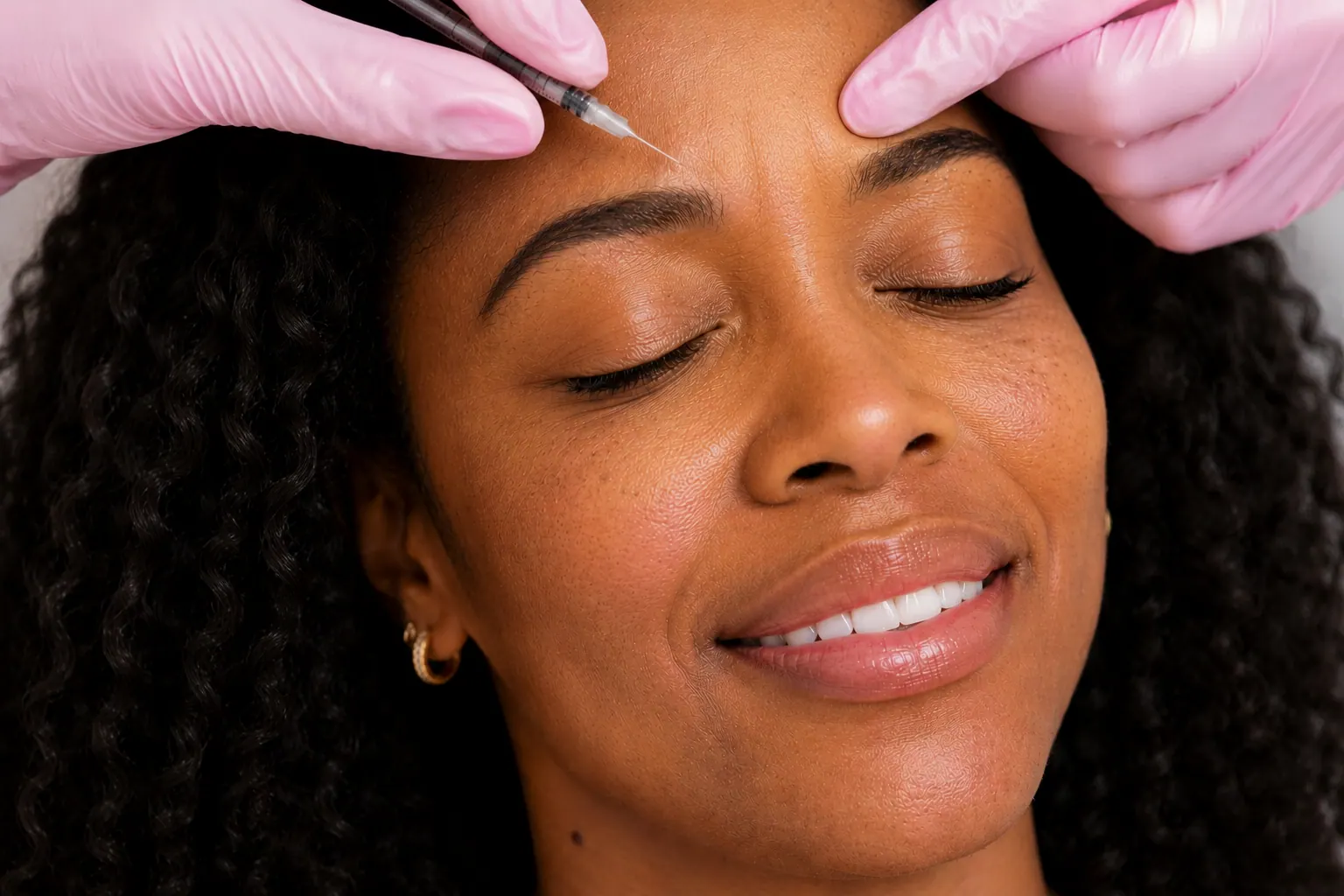
Both are purified forms of botulinum toxin type A. Injected into a targeted muscle, they block the nerve signal that tells the muscle to contract. Less contraction means the skin above stays smoother — which is why these treatments work best on dynamic wrinkles (the ones caused by movement, like frowning or squinting) rather than wrinkles already etched into resting skin.
Neither product "fills" anything. If you're dealing with volume loss rather than movement-related lines, you're looking at a dermal filler, not a neurotoxin — a distinction worth raising at your consultation if you're not sure which category your concern falls into.
The Real Differences
Onset time. Dysport tends to show visible results slightly faster than Botox — some patients notice softening within 2–3 days, compared to Botox's typical 3–5 day onset. Both reach full effect by around the two-week mark. For most patients this difference is minor, but it can matter if you're treating before a specific event.
Duration. At an appropriately dosed treatment, both last roughly 3 to 4 months. Neither has a meaningful edge in longevity — how long your results last has more to do with your metabolism, muscle strength, and treatment area than which product you chose.
Spread. Dysport molecules diffuse a bit more widely from the injection site. That can be an advantage on larger, flatter areas like the forehead, where broader, more even coverage is the goal. Botox's smaller diffusion radius makes it a common choice for more precise areas, like around the eyes, where you don't want the effect spreading into muscles that control eyelid position.
Dosing units aren't comparable 1:1. Botox and Dysport are measured in different unit systems — roughly, one Botox unit does the work of about three Dysport units. If you're comparing quoted "per-unit" prices between providers, comparing raw unit counts is misleading; ask about total treatment cost for the area you're getting done, not price-per-unit.
FDA-approved areas differ slightly. Botox carries FDA approval for frown lines, forehead lines, and crow's feet. Dysport's approval covers frown lines, though it's commonly used off-label — a normal and well-established practice in aesthetic medicine — for other areas as well. Your provider should be able to explain what's approved versus off-label for whatever you're discussing.
So Which One Should You Get?
Neither product is objectively better — the honest answer is "it depends on the area and your goals," and that's a conversation for your consultation, not a quiz you take at home. In practice:
- Forehead and larger areas often do well with Dysport's broader spread.
- Precision zones (around the eyes, fine lines) often favor Botox's more contained diffusion.
- Patients who've had one and want the other: plenty of people switch between the two over time with no issue. Your provider can adjust dosing accordingly.
What matters more than the brand name is who's holding the needle. Neurotoxin injections are medicine, not a beauty-counter service — dosing, injection depth, and muscle selection all affect both your results and your safety. This is a good moment to ask your provider directly about their training and credentials before you book.
What to Expect at Englewood Cosmetic Medical Spa
Because most patients return every 3–4 months to maintain results, neurotoxin treatment tends to become a recurring part of a skincare routine rather than a one-time decision. If that's the case for you, ask about our membership options at your consultation — they're built around exactly this kind of repeat care, so you're not re-booking and re-paying full price from scratch every quarter.
FAQ
Does Dysport hurt more than Botox?
No — both use a fine needle and most patients describe the sensation as a quick pinch. Neither is notably more or less uncomfortable than the other.
Can I switch from Botox to Dysport (or vice versa)?
Yes. Many patients try both over time. Your provider will adjust dosing since the two aren't measured the same way.
How soon will I see results?
Dysport: typically 2–3 days for initial softening. Botox: typically 3–5 days. Both reach full effect by about two weeks.
Is one safer than the other?
Both have strong, long-established safety records when administered by a properly trained, licensed provider. The bigger safety factor is provider experience, not brand.
How do I know if my provider is qualified to inject neurotoxins in New Jersey?
In New Jersey, injectables must be performed or delegated by a physician, and nurse practitioners and physician assistants may administer them under a written collaborative agreement with a supervising physician. Ask any provider about their license, training, and physician oversight before treatment.